A Practical Importer Guide Based on Real Factory Experience
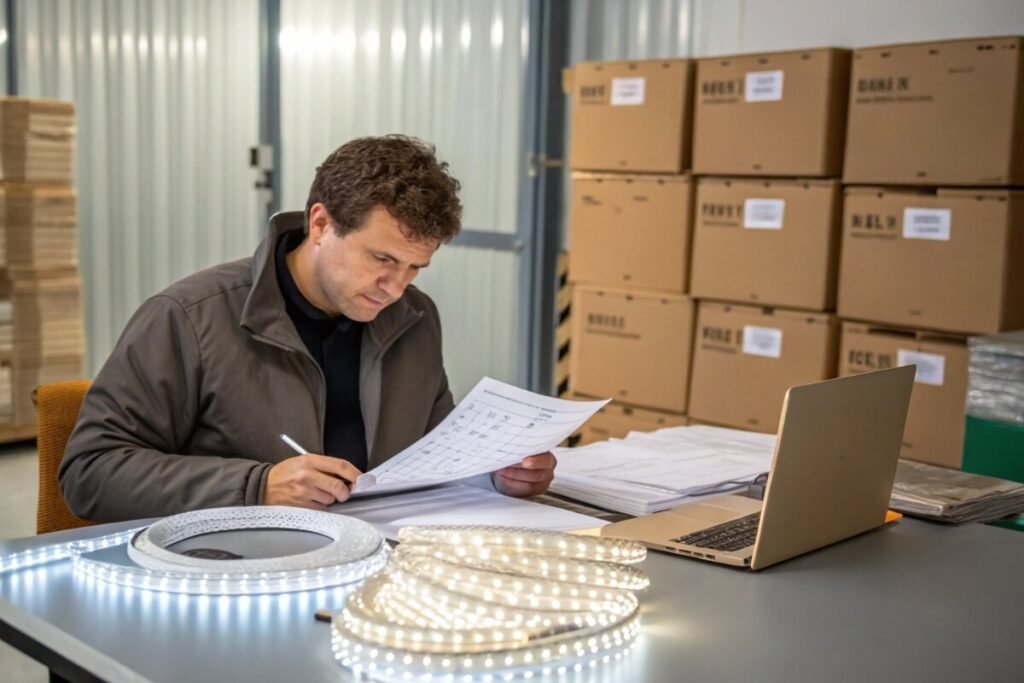
Introduction: A Familiar Import Story I’ve Seen Too Many Times.
A few years ago, an overseas importer shared a frustrating experience with me.
They had already tested samples, confirmed pricing, and scheduled the project timeline. Everything looked fine — until the bulk order arrived. The LED strip lights showed inconsistent brightness, installation was delayed, and what should have been a smooth import turned into weeks of rework and unexpected costs. As a factory-based LED strip light manufacturer and exporter at NOVATAPELED, we’ve seen this same story repeated across many projects — especially with importers sourcing from China for the first time, or scaling up too quickly.
That’s why I’m sharing this guide. Below, I’ll walk through how I approach LED strip light imports from China step by step — starting with the most common risks importers face, and then moving into supplier verification, specification control, compliance planning, logistics preparation, and payment risk management.
If you’re an importer, distributor, or project buyer, this framework is designed to help you avoid early mistakes and make more confident decisions before placing an order.
What Are the Key Risks When Importing LED Strip Lights from China?

Most import problems with LED strip lights come from quality inconsistency, unclear specifications, or missing compliance documentation.
From my experience, import risks usually fall into three categories:
- Quality inconsistency between samples and mass production
- Misunderstood specifications (voltage, IP rating, LED type, CRI)
- Compliance or certification issues at customs
These risks rarely come from bad intentions. In most cases, they result from communication gaps across languages, time zones, and production systems — especially when specifications are not fully locked before mass production.
Before placing an order, it is critical to confirm a complete LED strip light specification checklist in writing, covering voltage, LED density, IP rating, color temperature, CRI, and electrical tolerances to avoid misunderstandings during mass production.
How Do I Reduce These Risks in Practice?

Reducing import risk starts before production, not after problems appear.
Before any order moves forward, I always take the following steps:
- Define all technical specifications in writing(e.g. 24V, 120 LEDs/m, IP65, 3000K, CRI>90)
- Request and test pre-production samples, focusing on soldering quality, color consistency, brightness uniformity, and driver stability
- Sign a clear purchase contract covering lead time, defect limits, and inspection checkpoints
- Work only with suppliers holding valid export certificates such as CE, RoHS, ETL, or equivalent
For new suppliers, I strongly recommend starting with a small trial order. This allows you to test not only product quality, but also communication efficiency, response speed, and logistics coordination before scaling up.
A clear LED strip light purchase contract should define lead time, quality standards, acceptable defect rates, inspection checkpoints, and responsibility for delays or non-conforming products.
How Do I Verify Reliable LED Strip Light Suppliers Before Placing an Order?
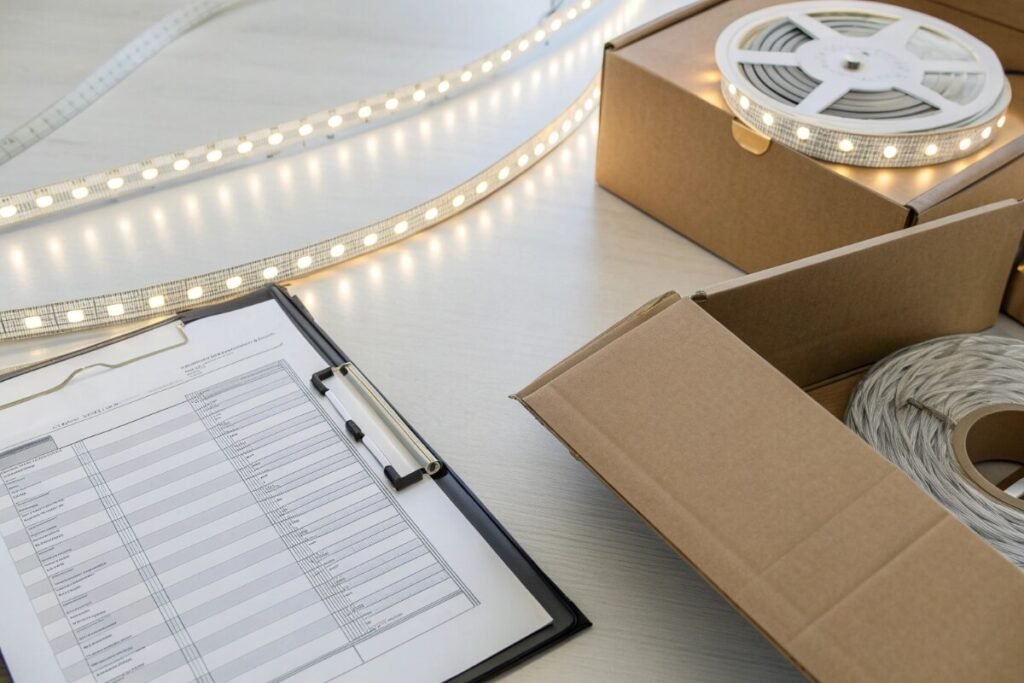
A reliable LED strip light supplier must prove real factory capability, not just provide attractive brochures. Supplier verification is the most critical step in importing safely from China. Over the years, I’ve developed a simple but effective checklist.
What Do I Always Check Before Placing an Order?
- Business license and export historyA legitimate manufacturer should provide a valid Chinese business license and verifiable export references.
- Certificate authenticityI always request CE, RoHS, or other test reports and cross-check them directly on the testing lab’s official website.
- Factory visibilityReal manufacturers are willing to show SMT lines, aging test areas, and QC processes through photos, videos, or live calls.
- Responsiveness and technical clarity A reliable supplier answers technical and trade questions clearly, accurately, and efficiently.
If there is any doubt, I recommend arranging a third-party factory audit through organizations such as SGS, TÜV, or QIMA before committing to production.
If you are working with a new supplier, conducting an LED strip light factory audit—either on-site or through a qualified third party—is one of the most effective ways to verify real manufacturing capability and quality control systems.
What Shipping and Customs Procedures Should I Prepare?

Shipping LED strip lights is as much about documentation as it is about transportation.
International shipping is not just about booking freight — it’s about clearly defining responsibility and preparing documents early.
Trade Terms Commonly Used
- FOB – I manage shipping after goods leave China
- CIF – Supplier handles shipping to my destination port
- DDP – Supplier handles customs and delivery (only with trusted partners)
Documents I Always Prepare in Advance
- Commercial invoice
- Packing list
- Bill of lading / airway bill
- Certificate of origin (if required)
- Compliance certificates (CE, RoHS, etc.)
Confirm HS codes early (often 9405.40 for LED lighting products) to avoid unexpected duties or clearance delays.
International shipping for LED lighting requires careful preparation of core shipping documents, including the commercial invoice, packing list, bill of lading or airway bill, and any required certificates for customs clearance.
How Can I Ensure Product Compliance and Safety Certifications?
Compliance requirements vary by market, and mistakes can lead to seized goods or legal liability. Before production starts, I always confirm which certifications are required:
- Europe: CE, RoHS, ERP, sometimes ENEC
- United States: UL or ETL, FCC
- Australia: SAA, C-Tick
- Middle East: SASO, GCC, or local equivalents
I verify that all test reports come from accredited labs and keep records for future audits. At our factory, every batch undergoes electrical and safety testing before shipment to ensure smooth customs clearance.
Certification requirements for LED strip lights vary by market, and importers must confirm the correct approvals—such as CE, UL, ETL, or regional equivalents—before production to avoid customs or compliance risks.
What Are the Best Payment Terms to Reduce Risk?
Payment structure is one of the most effective tools for controlling import risk. In most cases, I recommend:
- Starting with small orders using secure methods (PayPal, Trade Assurance, or T/T)
- Using milestone payments for larger projects(e.g. 30% deposit, 40% after inspection, 30% before shipment)
- Avoiding full upfront payments unless long-term trust is established
Clear contracts and verified bank details are essential to prevent fraud and misunderstandings.
Choosing safe payment terms when sourcing LED lighting from China is a critical risk-control step, especially for first orders, large projects, or new supplier relationships.
Final Thoughts: Importing LED Strip Lights from China Can Be Reliable
Importing LED strip lights from China becomes predictable and profitable when risks are controlled early.
This guide reflects how I personally manage imports to avoid costly mistakes — not theory, but lessons learned from real factory operations.
If you’re planning to start or scale your LED lighting business, following these steps will significantly reduce uncertainty before placing an order, not after problems appear.
And when it comes to specifications, supplier selection, or compliance requirements, getting an experienced second opinion at the right stage often prevents costly mistakes later in the process.
If you’d like a neutral review before moving forward, our team is always open to sharing practical insights.